
When your car shakes when braking, it is not entirely a mishap; it is an indication that something is amiss with your braking system or in your suspension system. Most drivers disregard this initial alarm because they believe it will resolve itself, but shaking, vibration, or shattering during braking are likely signs of an underlying mechanical problem, which may worsen over time.
This step-by-step guide teaches you why your car vibrates when braking, what might be broken, and when you need a professional inspection or repairs.
Why Your Car Shakes When Braking: Main Causes
A car shakes when braking, which may be brought about by several factors, most of which have to do with parts of the brakes or the alignment of the wheels. The trembling may be mild initially, but it may develop into harsh vibration when not dealt with promptly. We will look at the most common causes.
1. Warped Brake Rotors
Warped rotors are one of the most frequent causes of car vibration during braking. Rotors are metal discs that rotate along with the wheels, and these are the ones that the brake pads grapple onto to slow down your car. They attain high and low spots when they heat unevenly or when they wear unevenly.
These rough surfaces produce brake rotor vibration, which makes the overall brake system shake. This issue is usually more significant when the brake shakes at high speed, and the braking force nudges up, and the imbalance of the rotor is exaggerated.
2. Worn or Glazed Brake Pads
Worn-out pads may also cause vibration. In case of the wear of the brake pads, it loses its grip on the rotors. Once glazed, hard, shiny, and slick, they no longer produce a consistent friction. This results in brake pad vibration, causing pulling or shaking in the braking process.
Drivers tend to explain this as: My car shakes when I brake, particularly when decelerating at medium speeds.
3. Sticking Brake Callipers
The rotors are attached to a clamping device called callipers. When one of the callipers gets stuck or is caught in between, it can squeeze unevenly. This causes pulling, jerking or shaking when braking.
A sticking calliper may also burn, create excessive heat or wear out pads early. In extreme cases, it results in a bad vibration when braking that must be checked at once.
4. Suspension or Steering Issues
When you notice your steering vibrates when braking, your steering or your suspension may be shaking, and not necessarily the brakes. Common culprits include:
- Worn tie rod ends
- Damaged ball joints
- Loose control arm bushings
- Failing wheel bearings
These components assist in the stability of the wheels. Their failure is directly passed on to the steering wheel. This is also the reason why some drivers are reported to say that the steering wheel shakes when braking, particularly when the road is uneven or slippery.
Also Read: How Much Does A Car Transmission Replacement Cost In Perth?
5. Unbalanced or Misaligned Wheels
Poor alignment of the wheels or imbalanced tyres may produce vibration without braking, but the problem is exaggerated when the brakes are applied. When the wheels are unbalanced, brakes are more forced on one side, leading to braking instability and uneven rotor wear.
This misalignment becomes a regular shaking during braking as time progresses, regardless of the speed. Therefore, you must acquire the services of mechanics in Perth to avoid such issues from aggravating in the future.
6. Brake Disc or Rotor Thickness Variation
When the discs of the brakes wear unevenly, it results in a variation in thickness. This makes the contact of the brake pads with the rotors uneven, leading to a pulsing feeling. This has been referred to as a brake disc vibration, and this tends to increase with the heating of the brakes.
It is also easier to feel the vibration when stopping, commonly termed as the brake shakes when stopping.
7. Improper Installation or Substandard Brake Parts
Brake shudder can be caused by improperly fitted rotors, substandard brake pads or improper torque on wheel nuts. Poor quality of components may also lead to such problems as:
- Faster pad wear
- Noise under braking
- Early rotor warping
- Brake shudder, new brakes (new parts vibrate at once)
When your car shakes following a new installation, it could be the installation. Hence, always refer to a reputable auto care shop Perth to get your installation done.
More Reasons Your Car Shakes When Braking
1. Car Shakes When Braking Due to Brake Pedal Issues
When the brake pedal vibrates, it is a good indication that the issue is directly associated with the rotors or brake pads. Uneven friction is the reason for the pedal vibration, i.e. the brake pad is not able to remain on the rotor. It usually occurs when braking very slowly or when decelerating.
2. Car Shakes When Braking Due to Heat Buildup
Repeated braking too often, such as in traffic jams, mountains or towering, may result in uneven expansion of the metal rotors. This leads to:
- Rotor warping
- Brake fade
- Vibrations during braking
More serious brake rotor vibration can easily be caused by advanced heat damage and will need rotor resurfacing or replacement.
3. Car Shakes When Braking After Long Periods of Inactivity
Rotors can be rusted by moisture when a car is not used for weeks or months. This rust produces dotted points, which make the brakes uneasy to hold. Light rust is removable during driving, but excessive rust may result in vibration over time. Employ brake service Perth if you face such issues.
When to Get a Professional Brake Inspection
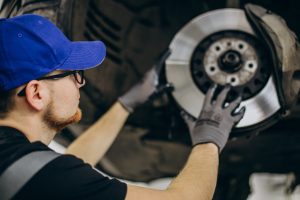
When the shaking or vibration becomes a routine, then professional car brake repair or inspection is required. Ignoring it can lead to:
- Longer stopping distances
- Rotor damage
- Increased tyre wear
- Brake failure
- Higher repair costs later
The next is what a routine brake check would consist of:
- Rotor condition check
- Assessment of brake pad thickness.
- Calliper movement test
- Evaluation of suspension components.
- Diagnostics of steering.
To diagnose and repair these brakes, many workshops provide auto brake repair services to ensure safety.
Also Read: What Is a Pre Purchase Car Inspection and Why Is It Important?
How Professional Services Can Help
In cases of aggravation, you might require:
- Brake pad replacement
- Rotor resurfacing or replacement.
- Calliper restoration or replacement.
- Wheel alignment
- Tire balancing
- Replacement of suspension parts.
Car inspection service is also offered by specialists, and it is necessary when your vibration is powerful or your car is not vibrating.
In case you are purchasing a car, and you do not want to get into brake trouble, a pre purchase car inspection Perth will help you detect the brake problems and make a commitment.
Mobile technicians may also come to your convenience. Mobile car service Perth assists in identifying brake shudder without visiting a workshop.
How to Prevent Brake Shaking
- Regularly have the car brake service
- Replace brake pads before they wear out
- Avoid hard braking when unnecessary
- Rotate and balance your tyres
- Keep your suspension components in good condition
- Ensure rotors are replaced or resurfaced on time
Prevention saves money and avoids dangerous driving conditions. Hence, call Mobile Mechanics Perth services when necessary.
Also Read: Why Choose Mobile Auto Mechanic in Perth? Top Benefits Explained
Conclusion
When a car shakes when braking, it is signalling a mechanical issue that shouldn’t be ignored. Whether the cause is warped rotors, worn pads, sticky callipers, or suspension problems, addressing the issue early ensures safer driving and prevents costly repairs later. Regular vehicle inspection Perth and proper maintenance will keep your braking system smooth, reliable, and vibration-free.
FAQs
1. Why does my car shake when braking?
Answer:
Usually due to warped rotors, worn brake pads, unbalanced wheels, or suspension issues.
2. How do I fix my car shaking when I brake?
Answer:
Get a brake inspection to check rotors, pads, and callipers, then repair or replace faulty parts through auto repair services.
3. Is it safe to drive if my car shakes when braking?
Answer:
Not recommended, vibration can reduce braking performance.
4. How much does it cost to fix a car that shakes when braking?
Answer:
$150-$600 depending on parts and labour.
5. Will replacing brake pads stop the shaking?
Answer:
Yes, if worn pads are the cause; otherwise, rotors may also need replacement.