
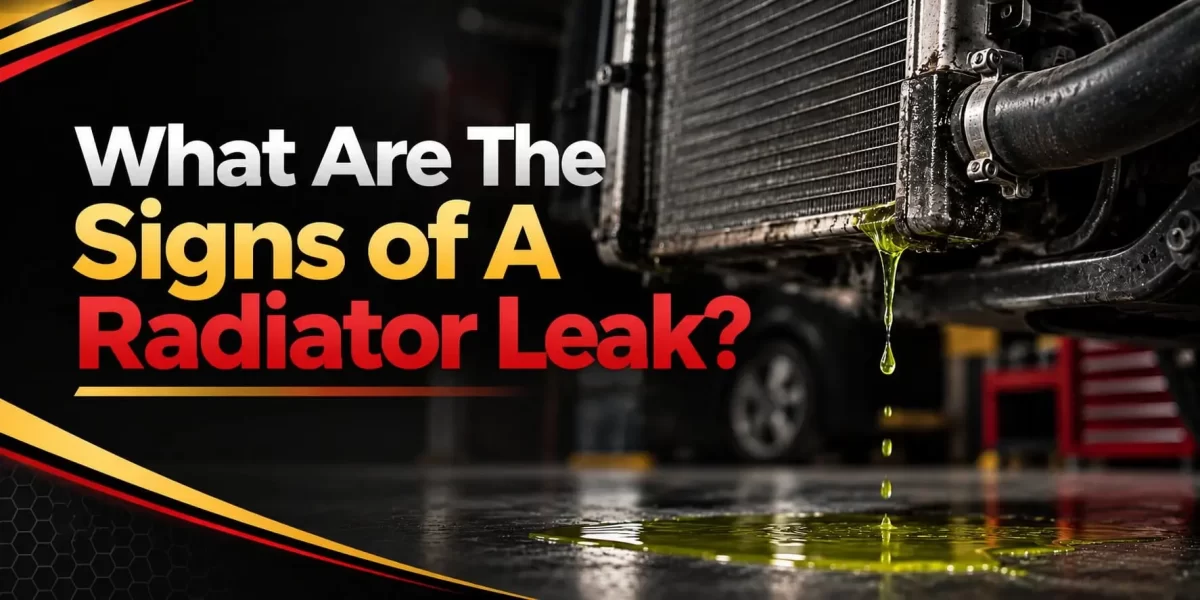
A driver who knows the signs of a radiator leak can catch the underlying cause before it stalls the car midway or leads to expensive repairs. The radiator regulates engine temperature by circulating coolant that absorbs and releases heat. If a leak develops, there are several measurable indicators that may appear. During a leak, your car may indicate a rising temperature gauge or a fluid patch beneath the vehicle.
There are many more signs worth knowing to prevent further damage. To help you with that, we’ll outline some of the common signs, their causes and how radiator service in Perth helps in repairing coolant leaks in cars.
What Are the Common Signs of a Radiator Leak?
The signs of a radiator leak are typically visible fluid loss beneath your car and rising temperature in the cabin. Identifying such signs early allows for diagnosis and repair before it becomes a serious condition.
1. Rising Temperature Gauge or Warning Light
Many people first suspect a problem after thinking, “My car radiator is leaking,” the moment they notice the temperature gauge creeping upward before any fluid becomes visible. An increasing temperature gauge reading indicates that your car’s engine is no longer being cooled at the right pace. Some vehicles are also fitted with a dedicated warning light that illuminates once internal temperature exceeds a safe threshold.
2. Coolant Puddles Beneath the Vehicle
If you are wondering what does a radiator leak looks like? Coloured coolant beneath the front of the vehicle or wet residue around cooling-system components can be useful visual clues. The accumulated coolant can be shown as green, pink and orange. The exact colour may differ from other automotive fluids. This differs from the clear liquid produced by an air conditioning system, which should not be mistaken for a leak.
3. Low Coolant Reservoir Levels
The coolant reservoir includes markings for the minimum and maximum fill levels. It allows you to check the coolant volume without removing the radiator cap. A gradual decline over a longer period of usage is normal. However, if your car’s coolant reservoir shows a sudden or rapid decline, it most probably means the coolant is leaking. It is a symptom still commonly described as radiator leaking water even though modern cooling systems rely on glycol-based coolant instead of plain water.
Also Read: Can I Put Water Into My Car Radiator?
4. Steam or Smoke From Under the Bonnet
If you notice that there is steam emerging from beneath the bonnet, it indicates that the coolant has contracted heated engine components under excessive pressure. This occurrence may mistakenly be assumed to be smoke that goes away with time, but checking the underlying cause and associated risk differs across vehicles. If your vehicle shows signs, immediately stop the vehicle and contact an auto repair shop.
5. Sweet Smell Near the Engine Bay
Coolants contain glycol-based compounds that produce a distinct sweet odour when exposed to air or heat. This smell may be noticeable inside the cabin if the leak is near the heater core or near the engine bay. Sometimes this odour may be noticeable with visible coolant leaks beneath your car, and it can appear before other signs of a car radiator leak become obvious.
6. Weak or No Cabin Heater Output
The cabin heater relies on heated coolant passing through the heater core to produce warm air. A radiator leak reduces the coolant circulation to this component, resulting in weaker heat output regardless of the temperature setting. Once a proper coolant leak fix restores circulation through the system, heater performance typically returns to normal within a short drive.
7. Visible Corrosion or Discolouration on the Radiator
If you notice coolant collecting underneath and think, “Why is my radiator leaking from the bottom?”. The source may be the lower hose, radiator tank, drain point or another nearby cooling-system component.
Usually in proper working conditions, radiators have a clear surface without crusted deposits or discolouration. If you see white, green or rust-coloured build-up around seams, joints or hose fittings, it means that there is coolant seepage in that area.
What Causes Radiator Leaks?
Radiator leaks typically result from mechanical wear or external damage to the components of the vehicle’s cooling system. Technicians at radiator shops in Perth may inspect for the following components to identify the root cause of the leak:
- Worn or cracked radiator hoses
- Corrosion within the radiator core
- A faulty or worn radiator cap
- Damage from road debris
- Loose or degraded hose clamps
- Gradual wear of components as they are near the end of their lifespan
Also Read: What Causes a Leaking Car Radiator and How Can You Fix It?
How Serious Is a Radiator Leak?
The severity of a radiator leak largely depends on the size and exact location within the cooling system. A coolant leak may cause the following damage to your car:
- Overheating of the engine
- Warping of the cylinder head
- A blown head gasket
- Reduced engine performance
- Oil contamination and coolant mix with engine oil in internal components
- Reduces the vehicle’s power to travel longer distances during extreme weather conditions and in heavy traffic
A professional radiator leak repair may involve fixing or replacing the affected hose, seal, clamp or radiator component, depending on where the leak originates.
What Should You Do If You Notice These Signs?
If you notice any signs of a radiator leak, park your car in a safe place and turn off the engine to let it cool completely. Once you have taken this first step, here’s what needs to be done next:
- Avoid opening the radiator cap while the engine remains hot because built-up pressure may cause serious harm
- Check coolant levels once cooled and top up only with the manufacturer-specified coolant type
- Inspect visible hoses and connections for cracks, looseness or fluid residue
- Contact a car mechanic to identify and fix the root cause of the problem
Drivers searching on the web for “auto radiator repair near me” should look for a repairer that can inspect the cooling system and identify the exact source of coolant loss before recommending repairs.
Final Thoughts
A coolant leak is not just about a puddle of liquid beneath your car, it shows that there is something wrong and needs urgent attention. A leaking coolant may overheat the engine, affect the driving experience, and increase the risk of oil contamination and coolant mixing with engine oil. If you notice any signs of coolant leaks, it is better to stop driving, let your vehicle cool down and contact a car specialist in Perth for a thorough inspection.