
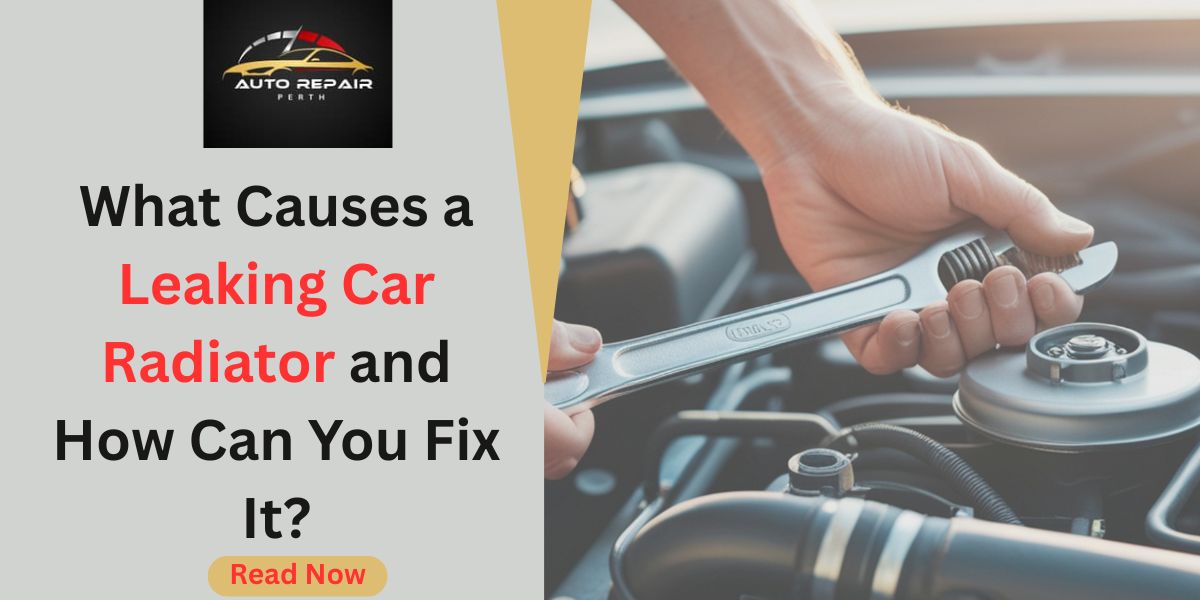
The radiator plays a crucial role in regulating your car’s engine temperature by circulating coolant and preventing heat buildup. If a leak happens, the cooling system may become less effective, and your vehicle’s engine may find it harder to stay within a stable temperature range. But the good news is that a leaking car radiator can be identified and repaired through a few clear and manageable steps.
In this aspect, this guide explains the symptoms of a leaking radiator, the possible causes, repairing options, likely costs and simple ways to prevent further occurrences.
What Are the Signs of a Leaking Car Radiator?
A radiator leak may start with minor changes in the vehicle’s performance. Early identification of these signs will help you apply coolant leak sealant before the cooling system loses excessive fluid.
1. Visible Coolant Under the Vehicle
Coolant is usually of a light colour and can be easily noticed in case of leakages when your vehicle has been parked recently. If you notice a steady stream of either green, yellow, orange, or pink colored liquid in front of the car, then there may be an engine coolant leak.
2. Unusual Movement in the Temperature Gauge
The temperature indicator usually maintains a particular range in everyday driving. When it starts climbing higher than usual, it could be that the cooling system is pumping less coolant than expected. This usually occurs in the case of a leak, which may later influence the estimated leaking car radiator.
3. Coolant Reservoir Level Dropping
The coolant reservoir is aimed at keeping the level constant. If you find that the fluid decreases faster than usual or that the fluid needs to be filled in often, this is usually an indication that there is a leak somewhere in the system, including the radiator. In such situations, search on the web for ‘coolant leak mechanic near me’ and contact your nearest car mechanic.
4. Sweet Scent Around the Vehicle
Coolant is a sweet-smelling, mildly scented substance. If you smell this around the front of the car or the vents, it could be coolant evaporating because of a leak. It is a common symptom if there is coolant leaking from the bottom of the car.
5. Light Vapour or Steam From the Engine Area
If the cooling system leaks a significant amount of fluid, the rest of the coolant could get warm enough to produce light vapour, which will escape through the front of the car. This is a sign that the engine area is not cooling properly as it should. In this situation, you may require engine coolant leak repair to avoid overheating.
6. Engine Temperature Rising Higher than Normal
Without the correct quantity of coolant in the cooling system, the engine will take more time to cool down. This can lead to an increase in temperature to higher levels than usual. Such indicators must be inspected in time through radiator repairs Perth since they are indicative of reduced cooling efficiency.
Also Read: https://www.autorepairperth.com.au/blog/why-does-my-car-leaking-oil-when-parked/
Is It Safe to Drive With a Leaking Car Radiator?
It is not advisable to drive with a leaking radiator since the cooling system might fail to maintain the same temperature. If the car is used over extended hours of operation, the temperature can be higher than the usual range. If you suspect that your radiator is leaking, immediately contact the nearest radiator shop Perth for assistance.
What Causes a Leaking Car Radiator?
A radiator can start leaking because of a number of reasons. Some of them are associated with natural wear with time, whereas others are caused by low maintenance or external forces.
1. Corrosion Inside the Radiator
Coolant is filled with anti-corrosion protecting additives. With time, such additives are weakened. When the coolant is not replenished on time, rust may develop slowly within the radiator. This corrosion may produce small weak spots, which ultimately lead to the escape of coolant, forming a radiator fluid leak.
2. Ageing or Cracked Radiator Hoses
The hoses that channel the coolant to the radiator and back are made of rubber. Their flexibility is eventually diminished by heat, age and pressure. Small cracks can be formed when the material is worn out. Coolant may leak through these cracks, which requires immediate professional assistance and car radiator sealants.
3. Radiator Cap Not Sealing Properly
The radiator cap is also significant in regulating the right amount of pressure in the cooling system. When the cap gets worn or the surface that helps in sealing the top is damaged, it might make the coolant leak around the radiator top. This issue is normally resolved through routine car radiator repair services.
4. Impacts From Road Debris
The radiator is located close to the front of the vehicle and is blocked by the grille, yet small stones and debris might still access it. These minor impacts have the potential to dent or weaken the outer layer and can also create leaks in the long run. Such weaknesses are often detected during a pre-purchase car inspection.
5. Water Pump Wear
The water pump circulates the coolant across the cooling system. Coolant can leak out of the pump housing in case the seals are weak or the pump becomes worn. This sort of leak is often identified during a pre-purchase vehicle inspection because it is part of the broader cooling system.
6. Infrequent Maintenance
At some point, coolant may lose its ability to prevent internal protection. Delaying the replacement of the coolant or using one that is not specified for your car, puts the chances of deposition, rust and internal wear at a high risk.
Also Read: https://www.autorepairperth.com.au/blog/car-transmission-replacement-cost/
How to Fix a Leaking Car Radiator
The correct repair method depends on where the leak is located and how serious it is. Several solutions are available for coolant leak fix, ranging from simple replacements to full radiator installation.
1. Using a Temporary Coolant Stop Leak Product
Stop leak additives will temporarily seal extremely tiny holes inside the radiator. Antifreeze stop leaks are handy to use on a short-term basis, but not a permanent solution.
2. Replacing Worn or Cracked Radiator Hoses
If the leakage is due to a hose and not the radiator itself, the replacement of the affected hose and clamps will restore the normal flow of coolant. This repair is often handled by mobile mechanics Perth for convenience.
3. Installing a New Radiator Cap
A new radiator cap is affordable and is able to rectify issues that are a result of improper sealing or the incorrect level of pressure. You can easily get a new cap at your nearest auto repair shop Perth.
4. Repairing Minor Radiator Cracks
Plastic end tanks sometimes have small cracks, which can be repaired with specialised epoxy. The radiators using aluminium can need specialised welding during engine coolant leak repair.
5. Replacing the Entire Radiator
If there is extensive corrosion of a radiator or multiple leaks, replacement is usually the surest long-term solution. Installing a new radiator with the help of mechanics in Perth can give your car a clean slate.
How Much Does It Cost to Repair a Leaking Radiator?
The price of repairing a leaking radiator depends on the nature of the repair required and the vehicle model. Here is a general overview of car radiator leak repair cost:
- Stop leak additives are usually the least expensive, yet they can only be used to provide temporary relief.
- Changing radiator hoses varies according to the design of a vehicle and the labour.
- One of the most affordable solutions is usually a new radiator cap.
- The costs of professional radiator repair are determined by the severity and the location of the leak.
- Another alternative is to change the whole radiator, which is usually the most reliable in the long run.
- Additional components like the thermostat or water pump may also require inspection in case they are worn out. This may affect the total cost to fix coolant leaks in your car.
How to Prevent Radiator Leaks in the Future
Proper maintenance and engine coolant sealant measures can prevent the possibility of leaks and facilitate the regular functioning of the cooling system.
1. Perform Regular Coolant Flushes
New coolant is used to avoid rust and to remove rusty deposits. One of the best options to maintain the radiator in good condition is to follow your vehicle maintenance schedule.
2. Inspect Hoses and Clamps
It is a good idea to periodically check the hoses for cracks or soft spots and to check the tightness of the clamps to prevent leakage.
3. Watch the Temperature Gauge
The temperature gauge gives preemptive information on cooling system efficiency. If the gauge increases a little beyond normal, then have the system checked to ensure that all is in proper working order.
4. Clean the Radiator Exterior
Cleansing dirt and debris off the radiator surface will ensure that there is free movement of air through the fins. This assists the radiator in cooling the engine.
5. Use the Right Coolant
Different vehicles need a particular formula of coolants. The appropriate type can be used to cover metal surfaces and conduct cooling.
Also Read: https://www.autorepairperth.com.au/blog/how-to-clean-car-battery-terminals/
Conclusion
A leaking car’s radiator is usually manageable with timely attention. Whether the fix includes a small part replacement or routine maintenance, most solutions are simple and effective. By using the right coolant, checking hoses and following regular service intervals, you can keep your car’s cooling systems in optimal conditions and enjoy steady performance.
Frequently Asked Questions
1. How can I identify if my radiator is leaking?
Answer:
You may notice coolant on the ground, a sweet scent near the engine, a dropping coolant level, or higher-than-normal temperature readings. All these indicate that the cooling system requires maintenance.
2. Can a radiator leak stop on its own?
Answer:
The radiator leak does not seal itself. The system should also be checked to ensure that the necessary repair is undertaken.
3. How far can I drive with a leaking radiator?
Answer:
If there is a radiator leak, it is better to drive very little. The distance to a workshop is generally not a problem when it is short, in contrast to long distances that may decrease the temperature stability.
4. Will an engine coolant stop leak product fix my radiator?
Answer:
Stop leak products may be used to provide temporary assistance to very small leaks. However, a mobile car service Perth may suggest an in-depth examination for permanent repairs.
5. Why is my car overheating even when the coolant appears full?
Answer:
The cooling system can have problems like limited flow, thermostat problems, or air pockets. To identify the precise cause, a car specialist Perth often tests the whole system.